Potholes
A message from our Chair of Highways and Transport.
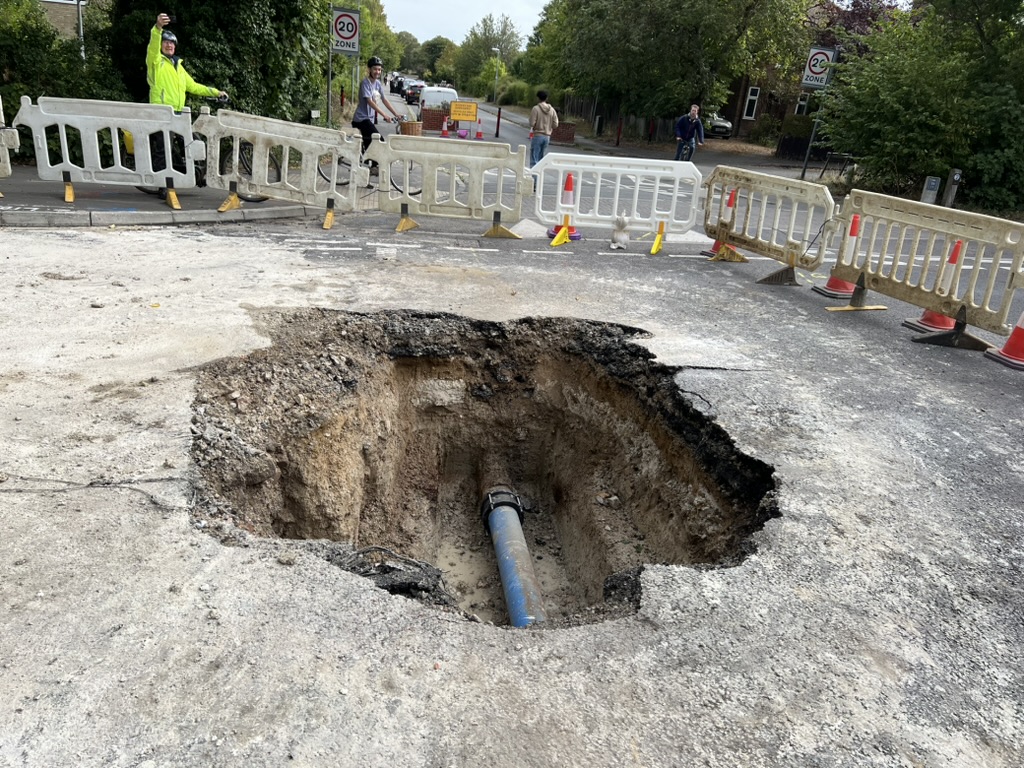
We are now firmly into pothole season. Historically this is when reports rise sharply, usually peaking in February before easing back to normal levels by May. Periods of freezing weather cause additional spikes, so once the snow and ice clear we expect a noticeable increase in reports.
This happens every year. We have made progress in recent years in reducing the peak, but this remains the toughest period and the one where pressure is highest.
We do proper lessons-learned and plan improvements for the following winter in May when the season is over.
A few important points
• Bad weather is the worst time to carry out pothole repairs and is when repairs are most likely to fail.
• If you see poor workmanship or a failed repair, please report it.
• Please also report potholes you find. Inspectors pick up around 75% of defects, but at this time of year potholes open up very quickly. If we do not know about it, we cannot fix it.
What has already improved
Over the summer and autumn we made some significant changes:
• A new asset management system enabling faster ordering and proper tracking from instruction through to completion.
• Better integration with Milestone so repairs are properly closed off.
• Randomised quality sampling of completed repairs.
• Record levels of resurfacing and surface treatment delivered.
• Trials to reduce “pothole quilt” outcomes.
• A new active travel maintenance hierarchy so key walking and cycling routes are treated appropriately.
• A reorganisation of highway maintenance
Things we know still need work and are actively being looked at:
• The M-Group contract, particularly the lack of penalties for poor workmanship beyond redoing the job.
• Intervention levels, especially around so-called “teenage” potholes that are not quite at threshold but inevitably grow.
• Data. Our data has improved significantly over the last three years, but there is still a challenge in getting good data quickly.
What we’re doing now
• We’ve relaunched operation “Seek and Destroy” this year, with more proactive “find and fill” activity.
• Weekly multi-agency meetings to coordinate response. One of the biggest challenges at the moment is managing streetworks and roadspace permissions given the volume of work.
• Bringing in extra resources, including additional crews, to reduce the backlog.
One final point: for standard pothole repairs we pay a fixed rate. If a crew is inefficient, slow, or finishes early, that cost sits with Milestone, not the council. Efficiency is their issue to resolve, not one that increases council spend.
This period is always difficult, but it is understood, planned for, and being actively managed. Things do improve as we move into spring.
Related Blog
 Blog
Blog
Eddeva Development
I was at the Eddeva development today to hear about progress on the site. I got taken round and shown the progress. Some information about t…
Read more → Blog
Blog
City Council Monthly Report October 2026
In this report: Planning 25/04382/FUL and 25/04383/LBC Market Square 25/04484/FUL 87-93 Oxford Road and Fitzwilliam College Sportsground 25/…
Read more → Blog
Blog
County Council Monthly report October 2026
In this report: LGR STRATEGY, RESOURCES AND PERFORMANCE Quality of Life Council budget consultation ADULTS & HEALTH Tackling obesity CHILDRE…
Read more →
Join the conversation
Comments are closed for this post.